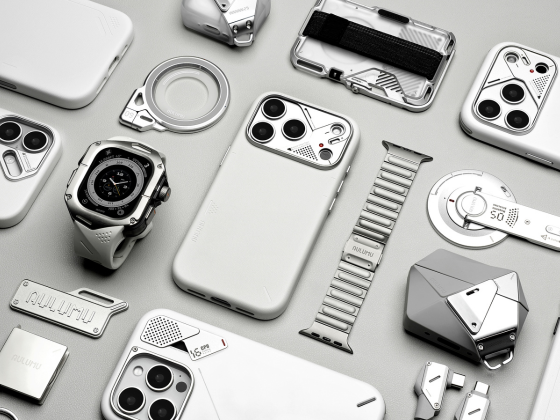
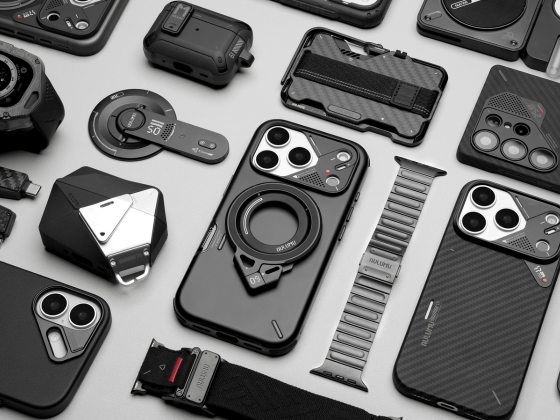
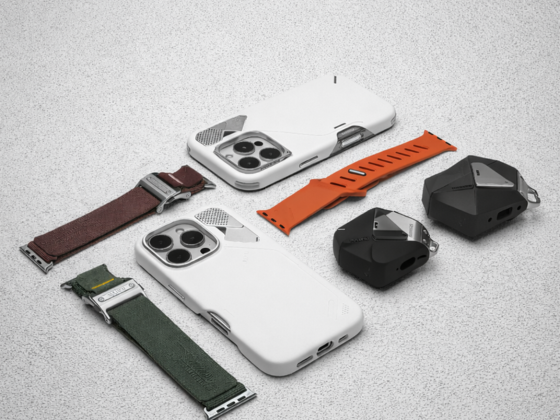

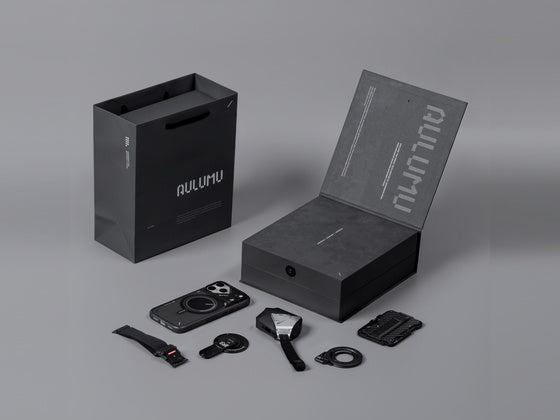

Aramid Fiber is gaining increasing attention , in addition to common materials like silicone, TPU, and PC . Its biggest appeal lies in its ability to combine lightweight design, unique woven texture, and everyday usage needs. For users who dislike heavy protective cases, want to preserve their phone's original appearance, and value material quality, aramid fiber is a worthwhile option. However, is an aramid fiber phone case really worth buying? What are the differences between it and a regular plastic phone case? What do 600D, 1000D, and 1500D represent? Does it offer sufficient drop protection, and can it be used with MagSafe accessories? This article will help you fully understand aramid fiber phone cases, covering material principles, main advantages, common types, actual protective capabilities, and selection criteria, so you can find a product that suits your usage habits.
 What Is an Aramid Fiber Phone Case?
Aramid fiber is a type of high-performance synthetic fiber. These materials possess high specific strength, good heat resistance, and abrasion resistance, making them suitable for various industrial and engineering applications. Aramid fiber is not the name of a single brand, but rather a collective term for a class of materials. Kevlar is a registered trademark for one well-known aramid material.
So, how does aramid fiber become a phone case? Unlike ordinary injection-molded plastic cases, aramid fiber phone cases are typically made by first creating a woven fabric from the fibers, and then processing the material through resin bonding, molding, cutting, and surface treatment to create a casing that conforms to the phone's shape. This manufacturing method gives the product a highly recognizable woven texture and allows designers to strike a balance between a slim profile and structural performance.
What are the advantages of aramid fiber phone cases?
The reason why aramid fiber has attracted attention in the high-end mobile phone accessory market is not only because it comes from industrial applications, but more importantly, because it can meet the comprehensive needs of some users for lightness, texture and everyday durability.
Lightweight design reduces the extra burden on the phone
As smartphone screens become larger and camera systems more complex, some flagship phones are already quite heavy. Adding a bulky protective case can exacerbate the burden during extended one-handed use. Aramid fibers possess a high specific strength, meaning the material's strength is relative to its weight. This makes them suitable for product designs that balance structural performance with lightweight construction. For phone cases, this means designers can explore thinner, lighter shell structures without having to rely solely on increasing thickness to achieve structural stability.
Highly recognizable woven texture
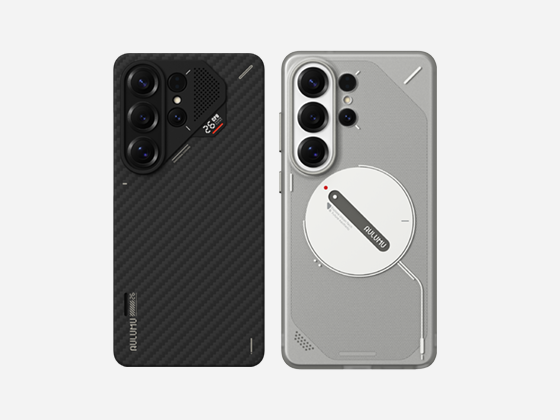
Another characteristic of aramid fiber phone cases is their typically unique woven surface. Different fiber specifications and weaving methods create fine, tight, or more pronounced textures. Compared to common solid-color silicone cases, these textures more easily convey a technological, industrial design, and clean visual style. For users who dislike exaggerated patterns but still desire distinctive materials in their phone accessories, aramid fiber is a good choice.
Good heat resistance
Aramid fibers possess excellent heat resistance, which is one of the key reasons for their application in engineering and protective applications. However, it's crucial to distinguish between the material itself and the performance of the complete phone case. A phone case, in addition to fibers, may also contain resin, coatings, adhesives, and magnetic components. The heat resistance of these components may not be the same as that of aramid fibers. Therefore, the inherent heat resistance of aramid fibers does not automatically mean that the phone case can actively reduce the phone's temperature or withstand any high-temperature environment. If you are concerned about your phone's heat generation during gaming, video recording, or high-load use, you should also check whether the product employs a dedicated heat dissipation structure and whether the design is supported by actual test data.
Suitable for users who prioritize lightweight design and everyday durability
In daily use, phone cases need to withstand friction from pockets, placement on desks, frequent handling, and other common scenarios. The material properties of aramid fibers make them suitable for slim and lightweight protective case designs, but their actual abrasion resistance still depends on the weave structure, resin system, and surface treatment. Similarly, abrasion resistance and drop protection are two different concepts. Even if a phone case has a scratch-resistant surface, it may not effectively absorb impacts from drops. Therefore, if you frequently spend time outdoors, or if your phone is prone to slipping from your hand, you need to pay extra attention to the protective design around the edges, corners, and screen.
What types of aramid fiber phone cases are available?
Aramid fiber phone cases are not all the same type of product. Even using the same material, different fiber specifications, weaving techniques, and structural designs will result in different appearances and user experiences.
Classified by fiber specifications: 600D, 1000D, and 1500D
When purchasing aramid fiber phone cases, 600D, 1000D, and 1500D are common specifications. Here , "D" stands for Denier, a unit measuring the linear density of a fiber or yarn. Traditionally, it's defined as the mass of 9000 meters of fiber or yarn, expressed in grams.
Therefore, 600D, 1000D, and 1500D are not drop protection ratings, nor are they numerical values for the thickness of the phone case. They reflect the linear density of the corresponding fibers or yarns. To learn more about the differences between these densities, you can refer to our article, Aramid Fiber Phone Cases: What Does 600D, 1000D or 1500D Mean?
Based on weave texture: fine texture and distinct texture
Besides specifications, the weave pattern is also a crucial factor influencing the appearance of aramid fiber phone cases. A fine weave typically presents a more restrained and uniform visual effect, suitable for users who prefer minimalist designs. More pronounced textures, on the other hand, enhance the material's depth and industrial style. This difference primarily manifests in appearance and feel. If you hold your phone for extended periods daily, prioritize your preferred surface feel; if you're more concerned with aesthetics, compare the color changes and visual effects of different textures under natural light.
Classified by structure: ultra-thin type and reinforced protection type
From the overall design of the phone case, they can be roughly divided into two categories.
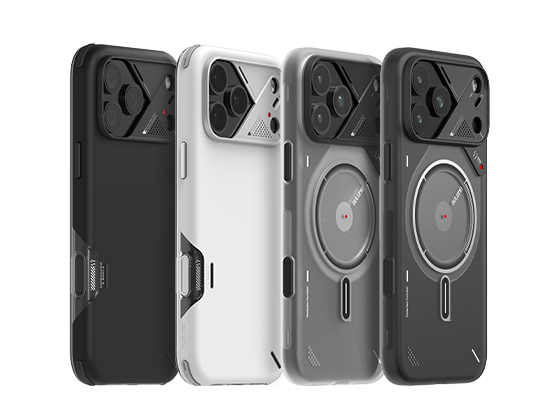
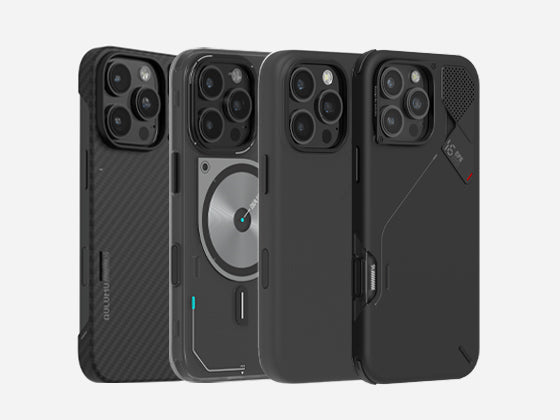
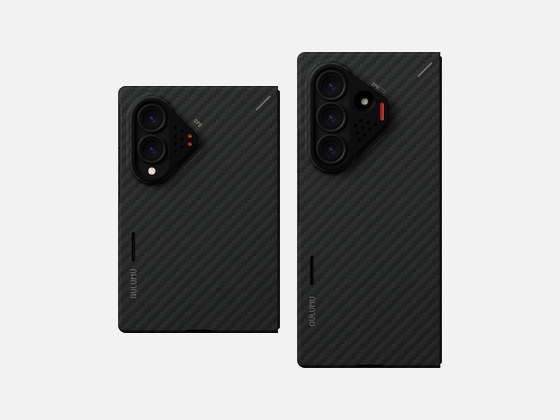
Ultra-thin aramid fiber phone cases typically emphasize low thickness, light weight, and a clean look, suitable for users who want to retain as much of the original grip feel as possible. Enhanced protective aramid fiber phone cases may incorporate flexible frames, reinforced corners, raised lens area, or other cushioning structures to improve everyday protection. Neither is inherently superior. The former prioritizes a slim and lightweight experience, while the latter focuses more on protective structure . For example, Aulumu offers two aramid fiber phone cases: an ultra-thin aramid fiber phone case and an aramid fiber drop-proof armor case. The difference between the two cases is simply the difference between ultra-thin and enhanced protection . When purchasing, you can choose according to your usage habits.
 What are the differences between aramid fiber phone cases and other phone case?
Different materials are suitable for different needs when it comes to phone cases. Instead of simply judging which material is the best, it's better to compare their characteristics in daily use.
|
Material |
Main features |
|
Aramid fiber |
It has good lightweighting potential and a unique woven texture. |
|
TPU |
Flexible, suitable for making shells with cushioning structures. |
|
PC |
It can be used to make a harder, shape-stable outer shell. |
|
Silicone |
It has a soft touch and usually has a certain degree of friction. |
Are aramid fiber phone cases compatible with MagSafe and wireless charging?
For iPhone users accustomed to using MagSafe chargers, magnetic stands, magnetic wallets, or power banks, accessory compatibility is equally important. Aramid fibers generally don't present the same electromagnetic compatibility concerns as more conductive carbon fibers. However, this doesn't mean all aramid fiber phone cases offer the same magnetic experience. Actual performance depends on several factors, such as whether the case contains suitable magnets ; whether the magnets' position and arrangement match the target device ; whether the case thickness meets the design requirements of the charger and accessories ; and whether the product has been verified for wireless charging and magnetic compatibility.
Therefore, before purchasing, check if the product page clearly states that it supports MagSafe or equivalent wireless charging. If you frequently use magnetic phone cases, it's recommended to choose compatible cases and ensure they can stably hold the desired accessories. Don't infer magnetic strength solely from the case material.
How to choose the right aramid fiber phone case for yourself?
After understanding the materials, you can narrow down your choices based on the following aspects.
Please confirm compatibility based on your phone model : Different phone models may have different body dimensions, camera layouts, and button positions. Even if two phones look similar, it doesn't mean the phone cases are interchangeable. Before placing an order, please confirm the specific model and check that the openings, buttons, and camera areas match.
Prioritize actual weight and thickness : If your main reason for buying an aramid fiber phone case is its lightness and thinness, then the actual weight and thickness are more direct than the specifications. It's recommended to compare the official product specifications, while also paying attention to the frame structure and grip comfort. A lighter phone case isn't necessarily better for everyone, but for users who frequently operate the phone with one hand, weight differences can affect long-term usability.
Choose the structure based on your protection needs : If you primarily use your phone in the office, at home, and during your daily commute, prioritize products that meet your needs for a slim and lightweight design. If your phone is frequently used for travel, outdoor activities, or other environments where drops are more likely, focus on the protective design around the bezels, corners, camera lens, and screen.
Pay attention to surface treatment and long-term user experience : The surface texture, coating, and processing precision of aramid fiber phone cases will affect their appearance and daily feel.
Don't judge a product's quality solely based on 600D or 1500D : While 600D, 1000D, and 1500D help consumers understand yarn linear density, they cannot independently determine the final quality of a phone case. Fiber quality, weaving process, composite structure, molding precision, actual thickness, and protective design can all affect the final performance. Instead of pursuing only higher numbers, choose products with transparent parameters, a reasonable structure, and that truly suit your usage habits.
aulumu Aramid Fiber Phone Case: Slim Design and Functional Experience
For users looking for a balance between phone protection, aesthetics, and everyday usability, aulumu's aramid fiber phone cases are worth considering. aulumu has released several aramid fiber phone cases this year, all made with high-density 1500D aramid fiber. The cases also feature built-in heat dissipation systems and magnetic closures. The designs are minimalist yet stylish.
Among these phone cases, the Armor Shockproof Aramid Fiber Case is the only one made of aramid fiber with enhanced drop protection. It features a TPU shock-resistant material overlay on top of the aramid fiber, providing ultimate drop protection. The other aramid fiber phone cases are slim models that prioritize a lightweight feel, offering a bare-phone-like experience without adding any burden to your hand.
 Conclusion
Aramid fiber phone cases bring high-performance fiber materials to the everyday mobile phone accessory market, offering users an alternative to ordinary plastic and silicone cases. Its main appeal lies in its potential for lightweight design, unique woven texture, and material feel suitable for high-end mobile phone accessories. If you want a phone case that is as thin and light as possible while maintaining a sleek, tech-savvy look, then aramid fiber is worth considering. Choosing the best aramid fiber phone case isn't simply about pursuing the highest denier (D-value), but rather finding the right balance between material, structure, weight, protective capabilities, and personal usage habits. Understanding these differences will allow you to more accurately determine whether an aramid fiber phone case is right for you and make a more informed choice when purchasing.